
Lake Titicaca: Everything You Need to Know Before Visiting Peru's Most Famous Lake

Most people experience Lake Titicaca in just a few hours.
They leave Puno early in the morning, stop at the famous floating Uros Islands, spend a little time on one of the main islands and are back in the city before sunset.
There's nothing wrong with that.
But after spending two nights on the lake, one on Amantaní and another on Taquile, I can confidently say that slowing down completely changes the experience.
This guide includes everything I wish I'd known before visiting Lake Titicaca independently: how to get there, how the boats work, where to stay, how much things cost and, most importantly, why I think spending a night with a local family is the best thing you can do here.
Where is Lake Titicaca?
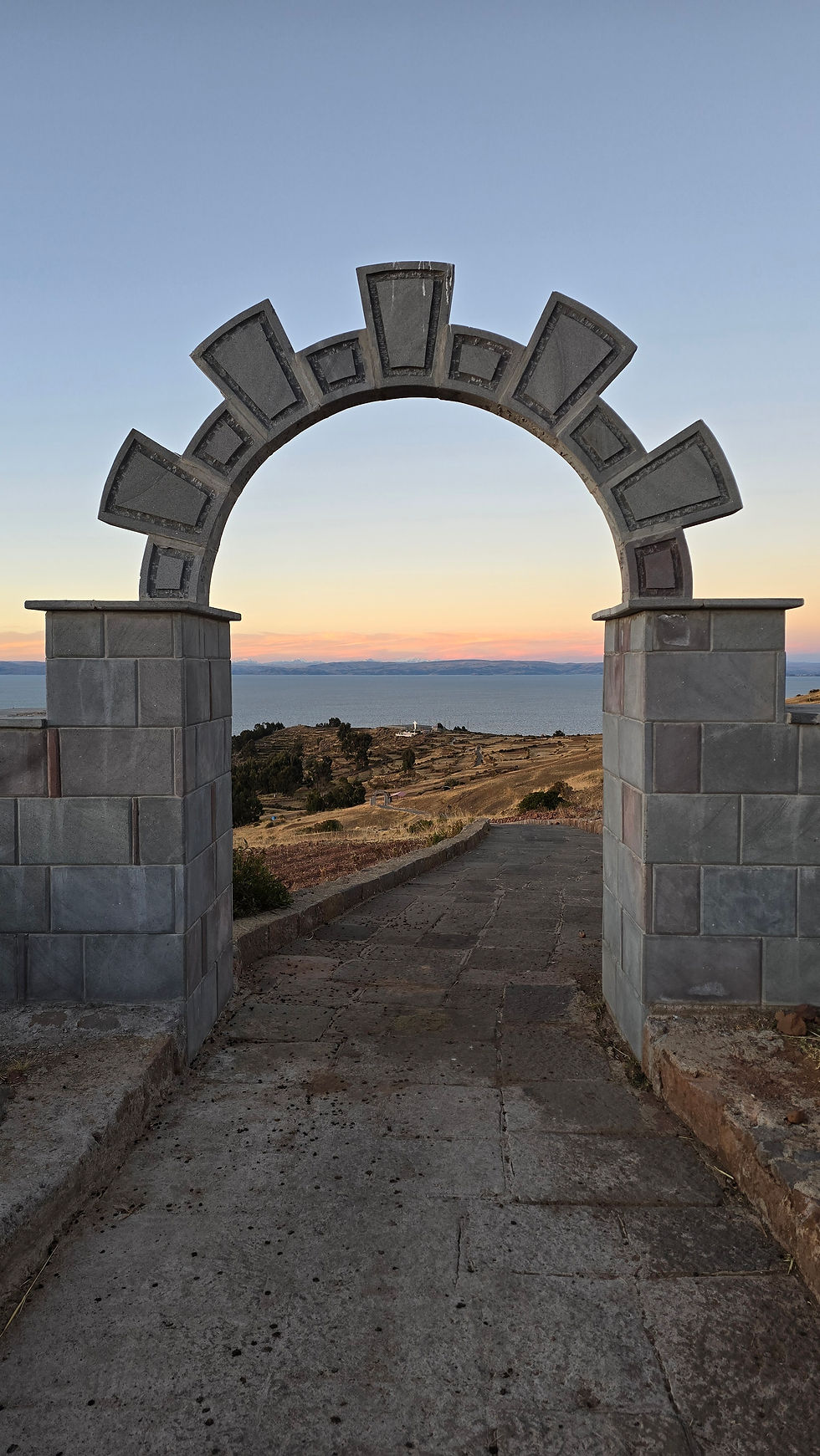
Lake Titicaca is shared between Peru (around 60%) and Bolivia (40%), making it one of the few international lakes in the world.
On the Peruvian side, Puno is the gateway to the lake, while Juliaca is the closest airport.
At 3,812 metres above sea level, Lake Titicaca is considered the highest navigable lake in the world. It stretches for around 160 kilometres long and 60 kilometres wide, reaching depths of more than 280 metres.
For centuries, these waters have been home to the Quechua and Aymara peoples, whose traditions are still very much alive today.
Tour or travel independently?

This was the question we spent the most time researching before arriving.
The vast majority of visitors join either a one-day or two-day organised tour.
The classic full-day tour visits the Uros Islands before continuing to one of the larger islands and returning to Puno in the afternoon.
The two-day version usually includes a homestay on Amantaní before stopping briefly in Taquile on the way back.
We chose a different approach.
Instead of following a group, we travelled independently and spent one night on both Amantaní and Taquile.
It requires a little more planning, but not nearly as much as the internet makes you think.
More importantly, it gives you the freedom to explore the islands at your own pace rather than following a fixed schedule.
If I came back tomorrow, I'd choose exactly the same way to do it.
Boats: Easier Than It Looks

Trying to find ferry schedules online can be surprisingly frustrating.
Most of the information you'll find is linked to organised tours, making it seem almost impossible to visit independently.
Fortunately, once you're in Puno, everything becomes much simpler.
Just head to the harbour the evening before your trip and buy your ticket directly. Unless you're travelling during particularly busy periods (especially August), there are plenty of boats leaving every morning.
The usual route is:
Puno → Uros → Amantaní → Taquile → Puno
The complete journey costs around 40 soles.
Boats stop for about one hour at the Uros Islands before continuing for another two and a half to three hours to Amantaní.
The following morning, boats leave around 7:30–8:00 am for Taquile, a journey of about one hour.
If you're returning to Puno the same day, you'll usually leave Taquile after lunch and arrive back between 3:30 and 5:00 pm.
The only slightly confusing part is that there isn't a regular public boat connecting Amantaní and Taquile outside this route, so if you're travelling independently you'll need to coordinate your return with the same boat company.
Which Islands Should You Visit?
Uros

The floating Uros Islands are undoubtedly Lake Titicaca's most famous attraction.
And to be fair, the engineering behind them is genuinely fascinating.
These artificial islands are built entirely from totora reeds, anchored to the bottom of the lake so they don't drift away.
Standing on a floating island made almost entirely from plants is something you'll probably never experience anywhere else.
That said, the visit wasn't my favourite part of the lake.
Today, much of the experience revolves around tourism. Families welcome visitors, explain how the islands are built, perform traditional songs and offer handicrafts for sale.
While it provides an interesting insight into the Uros culture, it also feels considerably more staged than the experiences you'll find on the other islands.
Amantaní

Amantaní quickly became my favourite place on the lake.
The island feels peaceful, authentic and wonderfully slow.
Most visitors hike to the ancient ruins of Pachatata or Pachamama, located at the island's highest point.
The climb isn't particularly difficult, although the altitude certainly makes it feel harder than it would at sea level.
The reward, however, is spectacular.
Watching the sun disappear behind Lake Titicaca while the temperature rapidly drops below freezing is one of those moments you don't forget.
Taquile

Taquile has a slightly different atmosphere.
It's famous for its extraordinary textile tradition, recognised by UNESCO, but the island itself deserves just as much attention.
Rather than rushing between viewpoints, my recommendation is simply to wander.
Walk through the beautiful Plaza de Armas, take whichever path catches your attention and enjoy the incredible lake views that seem to appear around every corner.
Sometimes travelling without a plan is the best plan.
Stay With a Local Family

This is what makes Lake Titicaca so special.
There are no hotels or big resorts.
Instead, you become part of someone's home.
On Amantaní we stayed with Hernán and Doris.
Instead of simply checking into a room, we spent the afternoon helping them harvest and clean choclo from their garden before sharing dinner together in their traditional fire kitchen.
On Taquile, our host Mario cooked every meal himself and joined us several times to chat about life on the island.
Those conversations taught us far more than any guided explanation ever could.
You begin to understand how families live, what they grow, how communities organise themselves and how traditions have survived for generations.
Even something as simple as dinner becomes an experience.
Meals are modest but delicious, usually consisting of a hot soup, eggs, fried cheese or fresh trout accompanied by locally grown vegetables, followed by coca or muña tea.
These aren't gourmet meals.
They're real meals shared with real people.
And that's exactly why they're memorable.
Weather and Altitude

Lake Titicaca sits at almost 3,800 metres, so don't underestimate the altitude.
If you're arriving directly from Lima or another low-altitude destination, your body will almost certainly need time to adjust.
Headaches, fatigue and poor sleep are common.
Personally, I only felt tired during the first day, but it took me three nights before I started sleeping properly.
During the day, the sun is incredibly strong thanks to the thin atmosphere.
As soon as it sets, temperatures drop dramatically and nights often fall below freezing.
Pack sunscreen, warm layers and don't forget a hat.
Costs

Travelling independently isn't expensive, but expect prices to be slightly higher than in Puno.
The complete boat route costs around $12, while homestays generally start at around US$30, usually including breakfast.
Meals cost between 6 and 10 dollars, with the communal restaurant in Taquile serving a simple set menu for around $9.
Entrance fees are currently:
Uros: $2,5
Amantaní: $3
Taquile: $3
You'll also notice that basic items such as bottled water are more expensive than on the mainland.
One last tip: bring enough cash. There are no ATMs once you leave Puno.
My Biggest Recommendation

If there's one piece of advice I'd give anyone visiting Lake Titicaca, it's this:
Don't rush it.
Spend at least one night on one of the islands.
The views are beautiful, of course.
But years from now, I don't think what you'll remember most is the lake itself.
You'll remember harvesting corn with your hosts, drinking coca tea around a fire, walking home under an impossibly starry sky and sharing conversations that would never happen on a day trip.
Those are the moments that make Lake Titicaca unforgettable.
Comments